
Colorectal Cancer
In Louisiana
Colorectal cancer remains a significant public health concern in Louisiana. Louisiana has one of the highest colorectal cancer death rates in the country, with the greatest burden affecting African Americans. Rates are also elevated in parts of Acadiana, and an increasing number of younger adults are being diagnosed with colorectal cancer in the state.
These disparities are driven by differences in access to care, screening rates, lifestyle factors, and broader social determinants of health. High rates of tobacco use, obesity, and physical inactivity further increase colorectal cancer risk statewide. That said, colorectal cancer remains one of the most preventable and treatable cancers. When found early through regular screening, treatment is more effective, and survival rates are high.
Borrow Our Colon!
the inflatable colon. If you
have questions, call
1-888-599-1073
Referral Form
Our Focus
Because early detection saves lives, Louisiana Cancer Prevention & Control Programs (LCP) focuses on removing barriers to screening, particularly for those most at risk.
LCP leads and supports statewide efforts to prevent colorectal cancer through education, community engagement, and policy and system-level change. We provide tools that raise awareness, expand screening access, and help providers and communities reach more people.
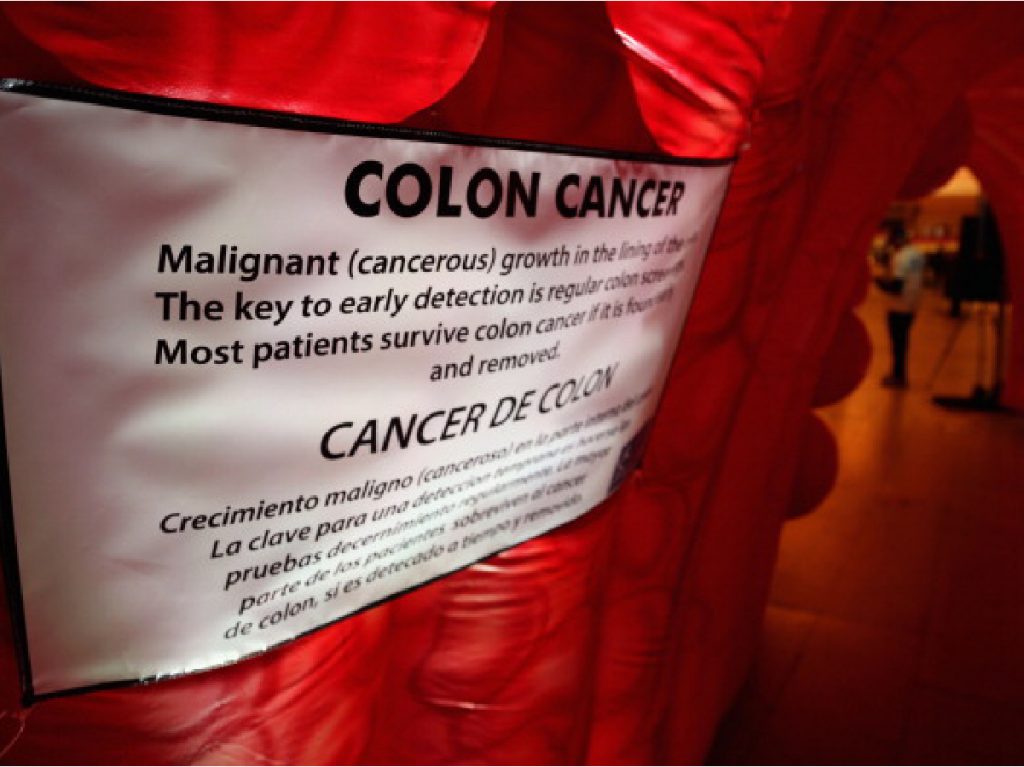
To support community outreach and education, LCP also offers interactive tools such as a walk-through inflatable colon and portable colon walls that help people better understand colorectal screening.
Screening Options
There are several effective ways to screen for colorectal cancer. What matters most is choosing a test you are willing and able to complete regularly. Most insurance plans cover preventive colorectal cancer screening for adults ages 45 and older.
STOOL-BASED TESTS
These tests look for signs of colorectal cancer in stool and are often inexpensive and easy to complete at home. They are typically performed once a year, and a positive result means a follow-up colonoscopy is recommended.
Examples include:
- Fecal Immunochemical Test (FIT)
- Guaiac-Based Fecal Occult Blood Test (gFOBT)
- Stool DNA tests (such as Cologuard)
VISUAL / STRUCTURAL EXAMS
These exams are performed so a healthcare provider can examine the colon and rectum. They are done less often but require advanced preparation and an in-office procedure.
Examples include:
- Colonoscopy
- CT colonoscopy
- Flexible sigmoidoscopy
Your healthcare provider can help determine which option is best for you based on risk and preference.
Why Screening Matters
Colorectal cancer often has no symptoms in its early stages, which is why screening is so important. If you have a family history or experience symptoms, talk to your doctor as soon as possible. Symptoms may include:
- blood in or on stool
- changes in bowel habits that last more than a few days
- persistent stomach pain or cramping
- unexplained weight loss
- weakness or fatigue
Research, Data & Resources
For those seeking more in-depth information, LCP provides access to trusted reports and data sources. These include:
- Louisiana Comprehensive Cancer Control Plan
- Louisiana Department of Health (LDH)
- National Cancer Institute
Whether you’re a researcher, healthcare provider, community partner, or member of the general public, these resources offer credible information to support improved decision-making and prevention efforts.
Louisiana Colorectal Cancer Roundtable (LCCRT)
LCP is a lead partner in the Louisiana Colorectal Cancer Roundtable (LCCRT), a statewide collaboration working to increase colorectal cancer screening rates. Founded in 2015, LCCRT brings together partners, including the American Cancer Society and leading cancer centers, to:
- track screening progress
- identify barriers to care
- issue annual legislative reports with data-driven recommendations
Since its launch, LCCRT has:
- helped reduce colonoscopy wait times at major hospitals
- increased screening engagement among healthcare providers
- hosted the Southeastern Colorectal Cancer Consortium Annual Conference in New Orleans
Community & Statewide Efforts
Across Louisiana, community-based partnerships play a vital role in preventing cancer and other chronic diseases by addressing the conditions that influence health where people live and work. The Louisiana Healthy Communities Coalition supports this work through a statewide network of local coalitions focused on improving community health and preventing chronic disease.